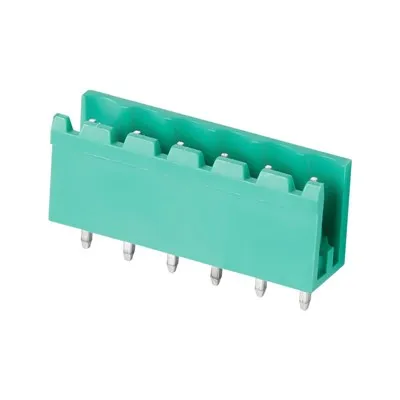

Terminal blocks are electrical connections used to transmit electrical signals or conduct electricity, commonly found in the connection of batteries, wires, and equipment. They can be classified by structure into single-hole, double-hole, socket, and hook types, and are made of copper, aluminum, iron, and their alloy plating (such as silver-plated copper and zinc-plated copper). Their core function is to achieve circuit connection, ensuring stability through screw fixing, welding, or crimping processes. They are widely used in home appliances, automobiles, power equipment, and new energy fields.
In 1894, the U.S. UL laboratory established a safety certification system, with its UL310 standard specifying the safety requirements for terminals. Subsequent international standards (such as IEC455) and national standards (GB6988.6, GB4026) further refined the testing specifications, covering terminal cross-sectional imaging, dimensional accuracy, and wire marking. Modern production employs precision stamping, cold pressing processes, and automated production lines, and incorporates machine vision technology for quality monitoring to ensure key indicators such as insulation and contact reliability.
In engineering, they serve as interfaces reserved for post-station projects in pre-station engineering, and are pre-embedded facilities for post-station interface projects.
Terminals: Components connecting the battery to external conductors. When observing objects, the terminal section inspection microscope produces an upright three-dimensional image with strong stereoscopic effect, clear and wide imaging, and a long working distance. Equipped with a high-precision wire harness terminal image measurement and analysis system, it forms a wire harness terminal inspection microscope. The combination of a high-quality optical system and a high-resolution camera makes the section images clearer, and the unique fixed magnification and range settings make the measurement more accurate.