


As a supplier of Entrelec Terminal Blocks, I often encounter inquiries about various technical specifications, and one question that frequently comes up is: "What is the temperature coefficient of Entrelec Terminal Blocks?" In this blog post, I'll delve into this topic, providing a comprehensive understanding of the temperature coefficient and its significance in the context of Entrelec Terminal Blocks.
Understanding the Temperature Coefficient
The temperature coefficient is a crucial parameter that describes how a material's electrical or physical properties change with temperature. In the case of terminal blocks, the temperature coefficient mainly refers to the change in electrical resistance as the temperature varies. This change can have a significant impact on the performance and reliability of the terminal block in different operating conditions.
For Entrelec Terminal Blocks, the temperature coefficient is typically expressed in parts per million per degree Celsius (ppm/°C). A positive temperature coefficient means that the resistance of the terminal block increases as the temperature rises, while a negative coefficient indicates a decrease in resistance with increasing temperature. Most metals, which are commonly used in the construction of terminal blocks, have a positive temperature coefficient.
Why the Temperature Coefficient Matters
The temperature coefficient of a terminal block is important for several reasons. Firstly, it affects the power dissipation in the terminal block. As the resistance changes with temperature, the power dissipated as heat (calculated using the formula P = I²R, where P is power, I is current, and R is resistance) also changes. This can lead to overheating if the temperature coefficient is not properly considered, especially in high - current applications.
Secondly, it impacts the accuracy of electrical measurements. In circuits where precise current or voltage measurements are required, the change in resistance due to temperature can introduce errors. For example, in a measurement circuit with a terminal block, a significant change in resistance caused by temperature variations can distort the measured values.
Finally, the temperature coefficient is related to the long - term reliability of the terminal block. Repeated expansion and contraction of the materials due to temperature changes can cause mechanical stress, which may lead to loose connections, increased contact resistance, and ultimately, failure of the terminal block.
Temperature Coefficient in Entrelec Terminal Blocks
Entrelec Terminal Blocks are designed with high - quality materials to ensure stable performance over a wide temperature range. The materials used in these terminal blocks are carefully selected to have a relatively low and predictable temperature coefficient. This helps to minimize the effects of temperature changes on the electrical properties of the terminal block.
For instance, the contacts in Entrelec Terminal Blocks are often made of copper or copper alloys. Copper has a well - known positive temperature coefficient of approximately 3930 ppm/°C at room temperature. However, through advanced manufacturing processes and alloying techniques, Entrelec is able to control and optimize the temperature coefficient of the terminal block contacts to ensure reliable operation.
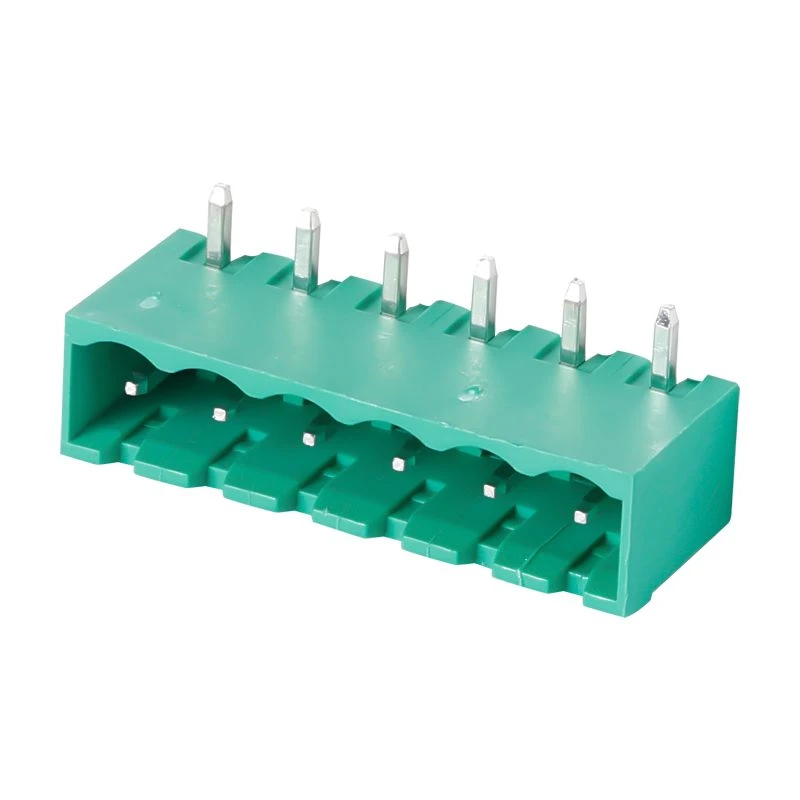
Let's take a look at some specific models of Entrelec Terminal Blocks and how their temperature coefficients affect their performance. The 2EDGRC - 5.08 Plug-in Type Terminal Block is designed for applications where space is limited. It is built with materials that have a low temperature coefficient, which means that its resistance remains relatively stable even when the temperature fluctuates. This is crucial in applications where the terminal block may be exposed to varying environmental temperatures.
Similarly, the 2EDGKA - 7.62 Plug-in Type Terminal Block is suitable for higher - current applications. The design of this terminal block takes into account the temperature coefficient to ensure that the power dissipation remains within acceptable limits, even at elevated temperatures. This helps to prevent overheating and ensures the long - term reliability of the connection.
The 2EDGKM - 5.0 Plug-in Type Terminal Block is another example. It is engineered to provide a stable electrical connection in a wide range of temperature conditions. The low temperature coefficient of its materials helps to maintain consistent electrical performance, reducing the risk of measurement errors and connection failures.

Measuring the Temperature Coefficient
To measure the temperature coefficient of an Entrelec Terminal Block, specialized equipment is required. A common method is to measure the resistance of the terminal block at different temperatures and then calculate the coefficient using the following formula:
[ \alpha=\frac{R_2 - R_1}{R_1(T_2 - T_1)}]
where (\alpha) is the temperature coefficient, (R_1) is the resistance at temperature (T_1), and (R_2) is the resistance at temperature (T_2).
Entrelec conducts rigorous testing during the manufacturing process to ensure that the temperature coefficient of each terminal block meets the specified standards. This includes testing the terminal blocks in temperature - controlled chambers over a wide range of temperatures to accurately measure the change in resistance.
Selecting the Right Terminal Block Based on Temperature Coefficient
When selecting an Entrelec Terminal Block for a specific application, it is important to consider the temperature coefficient. In applications where the temperature is relatively stable, a terminal block with a slightly higher temperature coefficient may be acceptable. However, in applications where the temperature varies significantly, such as in outdoor environments or industrial settings with high - heat equipment, a terminal block with a low temperature coefficient is recommended.
For example, in a solar power system, where the terminal blocks are exposed to direct sunlight and large temperature variations throughout the day, a terminal block with a low temperature coefficient is essential to ensure reliable operation and prevent power losses due to overheating.
Conclusion
In conclusion, the temperature coefficient of Entrelec Terminal Blocks is a critical parameter that affects their performance, reliability, and suitability for different applications. By understanding the concept of the temperature coefficient and how it is managed in Entrelec Terminal Blocks, you can make more informed decisions when selecting the right terminal block for your needs.
If you are interested in purchasing Entrelec Terminal Blocks or have any questions about their temperature coefficient or other technical specifications, please feel free to contact us for a detailed discussion. We are committed to providing you with the best solutions for your electrical connection needs.
References
- "Electrical Conductivity and Temperature Coefficient of Resistance" - Physics textbooks
- Entrelec Terminal Block product manuals and technical datasheets


