


As a supplier of PCB spring terminal blocks, I often encounter inquiries from customers about various performance characteristics of our products. One crucial aspect that has been coming up more frequently lately is the salt - spray resistance of PCB spring terminal blocks. In this blog, I will delve into what salt - spray resistance means for these terminal blocks, why it matters, and how our products perform in this regard.
Understanding Salt - Spray Resistance
Salt - spray resistance refers to the ability of a material or product to withstand the corrosive effects of salt - laden environments. When exposed to salt spray, which can occur in coastal areas, industrial settings with salt - based chemicals, or even in some transportation applications, metals and other components are at risk of corrosion. Corrosion can lead to a variety of problems, such as reduced electrical conductivity, mechanical failure, and a shortened lifespan of the product.
For PCB spring terminal blocks, salt - spray resistance is of utmost importance. These terminal blocks are used to connect electrical wires to printed circuit boards (PCBs). Any corrosion on the terminals can disrupt the electrical connection, leading to intermittent or complete loss of signal, which can be catastrophic in many applications, including automotive electronics, marine equipment, and industrial control systems.
Why Salt - Spray Resistance Matters for PCB Spring Terminal Blocks
- Reliability in Harsh Environments
Many industries operate in environments where salt - spray exposure is inevitable. For example, the marine industry is constantly exposed to saltwater, and any electrical components used on boats or offshore platforms need to be highly resistant to corrosion. Similarly, automotive electronics in coastal regions are also at risk of salt - spray damage. PCB spring terminal blocks with good salt - spray resistance ensure reliable electrical connections in these harsh conditions, reducing the likelihood of system failures and costly repairs. - Long - Term Performance
Corrosion is a gradual process that can degrade the performance of terminal blocks over time. By having high salt - spray resistance, the terminal blocks can maintain their mechanical and electrical properties for a longer period. This means that the end - user can expect consistent performance from the electrical system without having to replace the terminal blocks frequently. - Compliance with Standards
Many industries have strict standards regarding the corrosion resistance of electrical components. For instance, the International Electrotechnical Commission (IEC) and the American Society for Testing and Materials (ASTM) have developed standards for salt - spray testing of electrical connectors. PCB spring terminal blocks that meet these standards are more likely to be accepted in various applications, giving customers confidence in the quality of the product.
How Our PCB Spring Terminal Blocks Perform in Salt - Spray Tests
At our company, we understand the importance of salt - spray resistance for our PCB spring terminal blocks. We subject our products to rigorous salt - spray tests in accordance with industry standards.
Our tests involve placing the terminal blocks in a salt - spray chamber where a fine mist of saltwater is continuously sprayed onto the samples. The test duration can vary depending on the specific requirements of the application, but typically, we conduct tests for several hundred hours. After the test, we carefully examine the terminal blocks for any signs of corrosion, such as rust, pitting, or discoloration.

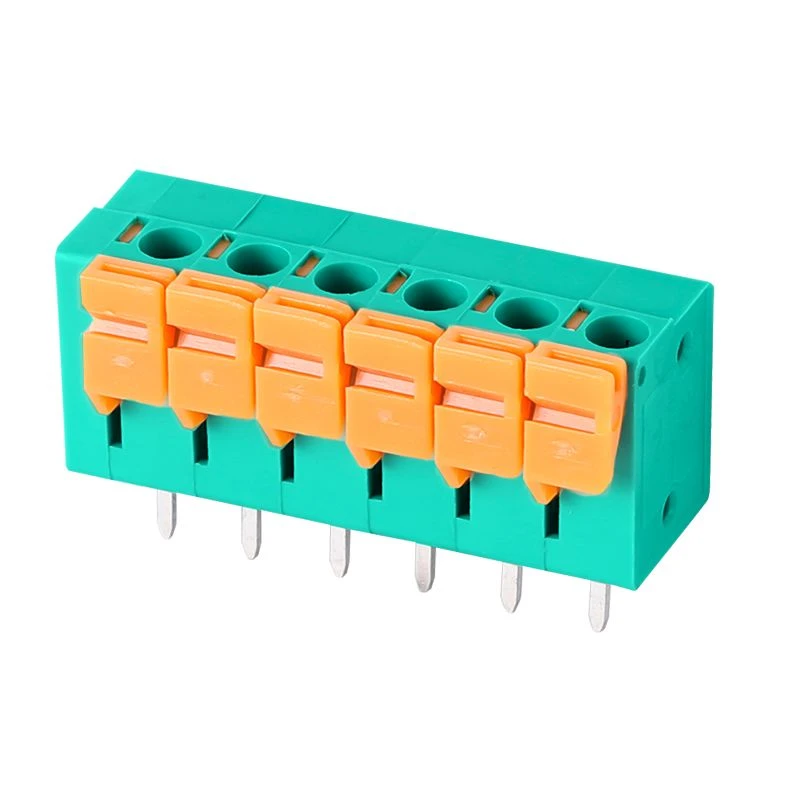
Our 211R PCB Spring Terminal Block has shown excellent performance in salt - spray tests. The terminals are made from high - quality materials that have been specifically selected for their corrosion resistance. The surface treatment of the terminals further enhances their ability to withstand salt - spray exposure. Even after hundreds of hours of salt - spray testing, the 211R terminal blocks maintain their electrical conductivity and mechanical integrity.
Similarly, our 142R - 5.08 PCB Spring Terminal Block and 142V - 5.08 PCB Spring Terminal Block also perform well in salt - spray tests. These terminal blocks are designed for applications where a high level of reliability is required, and their salt - spray resistance is a key factor in their suitability for such applications.
Factors Affecting Salt - Spray Resistance of PCB Spring Terminal Blocks
- Material Selection
The choice of materials for the terminal blocks plays a significant role in their salt - spray resistance. We use high - grade metals, such as copper alloys and stainless steel, which have inherent corrosion resistance. These metals are often coated with additional layers, such as nickel or tin, to further enhance their protection against salt - spray corrosion. - Surface Treatment
Surface treatment processes, such as electroplating and passivation, can significantly improve the salt - spray resistance of the terminal blocks. Electroplating adds a thin layer of a corrosion - resistant metal to the surface of the terminals, while passivation creates a protective oxide layer that inhibits corrosion. - Design and Manufacturing Quality
The design of the terminal blocks also affects their salt - spray resistance. A well - designed terminal block should minimize the areas where salt - water can accumulate, as standing water can accelerate corrosion. Additionally, high - quality manufacturing processes ensure that there are no defects or imperfections on the surface of the terminals, which could serve as initiation points for corrosion.
Conclusion
In conclusion, salt - spray resistance is a critical property for PCB spring terminal blocks, especially in applications where they are exposed to harsh environments. Our company is committed to providing high - quality terminal blocks with excellent salt - spray resistance. Our 211R PCB Spring Terminal Block, 142R - 5.08 PCB Spring Terminal Block, and 142V - 5.08 PCB Spring Terminal Block have been tested and proven to withstand salt - spray exposure, ensuring reliable electrical connections and long - term performance.
If you are in the market for PCB spring terminal blocks with high salt - spray resistance, we invite you to contact us for a detailed discussion about your requirements. Our team of experts is ready to assist you in selecting the right terminal blocks for your application. We look forward to working with you to provide the best solutions for your electrical connection needs.
References
- International Electrotechnical Commission (IEC) standards on corrosion testing of electrical connectors.
- American Society for Testing and Materials (ASTM) standards on salt - spray testing of metals.


