

As a seasoned supplier of terminal blocks in electrical panels, I've witnessed firsthand the critical role these components play in ensuring the safety, reliability, and efficiency of electrical systems. Terminal blocks serve as the connection points for electrical wires, allowing for the easy and secure transfer of power and signals within an electrical panel. But with a wide range of terminal blocks available on the market, it's essential to understand the industry standards that govern their design, manufacture, and use.
The Importance of Industry Standards
Industry standards are established guidelines and specifications that ensure the quality, safety, and compatibility of products. In the case of terminal blocks, these standards help to ensure that they can withstand the electrical and mechanical stresses they are likely to encounter in an electrical panel, and that they are designed and manufactured to a consistent level of quality.
One of the primary reasons for the existence of industry standards is to protect the end - user. Electrical systems can be dangerous, and faulty terminal blocks can lead to short circuits, electrical fires, and other safety hazards. By adhering to industry standards, manufacturers can help to minimize these risks and ensure that their products are safe for use.
Another important aspect of industry standards is compatibility. In an electrical panel, different components need to work together seamlessly. Standards ensure that terminal blocks can be easily integrated with other components, such as circuit breakers, relays, and switches. This compatibility simplifies the design and installation process and reduces the likelihood of errors.
Key Industry Standards for Terminal Blocks
UL Standards
The Underwriters Laboratories (UL) is a well - known organization in North America that sets standards for a wide range of electrical products, including terminal blocks. UL standards are focused on safety and performance. For example, UL 1059 is the standard for general - use insulated terminal blocks. This standard covers requirements for the mechanical and electrical properties of terminal blocks, such as their ability to withstand voltage, current, and temperature. Terminal blocks that are UL - listed have been tested and found to meet these safety requirements, which gives customers confidence in their reliability.
IEC Standards
The International Electrotechnical Commission (IEC) develops standards that are used globally. IEC 60947 - 7 is the standard for terminal blocks used in low - voltage switchgear and controlgear assemblies. This standard addresses aspects such as the electrical and thermal performance of terminal blocks, their ability to withstand short - circuit currents, and their mechanical strength. IEC standards are widely recognized and are often used in international trade and in the design of electrical systems for global markets.

DIN Standards
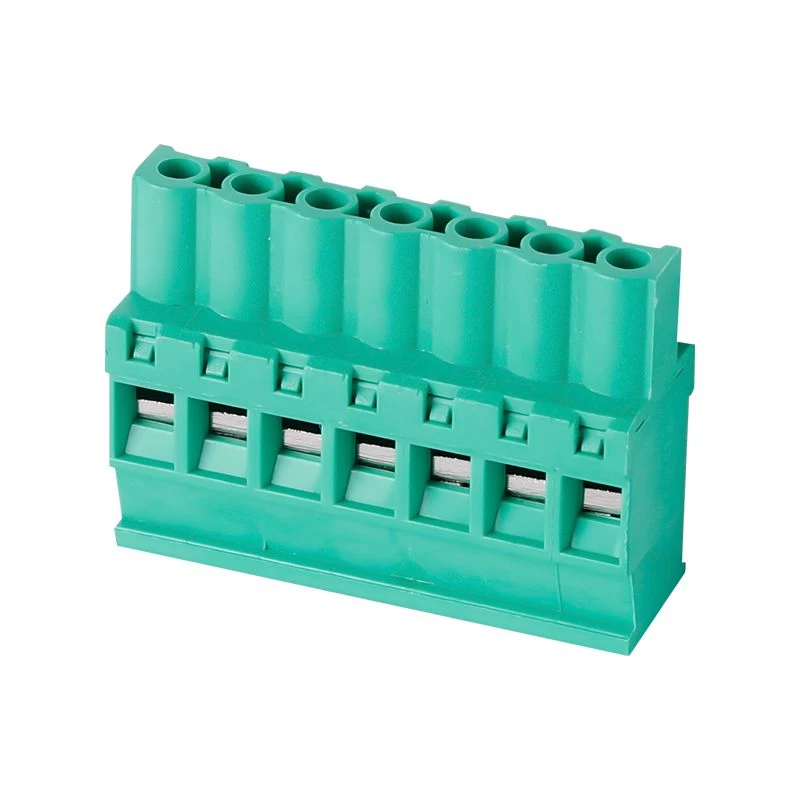
In Europe, the Deutsches Institut für Normung (DIN) standards are also important for terminal blocks. DIN standards provide detailed specifications for the dimensions, materials, and performance of terminal blocks. For instance, DIN 46277 standardizes the pitch (distance between connection points) of terminal blocks, which ensures interchangeability between different manufacturers' products. This standardization makes it easier for engineers and installers to select and use terminal blocks in electrical panels.
Compliance and Certification
As a supplier of terminal blocks, we understand the importance of complying with these industry standards. All of our products, such as the 2EDGKB - 5.08 Plug-in Type Terminal Block, the 15EDGR - 3.81 Plug-in Type Terminal Block, and the 2EDGKDM - 5.08 Plug-in Type Terminal Block, are designed and manufactured to meet or exceed the relevant UL, IEC, and DIN standards.
To demonstrate our commitment to quality and compliance, we have our products tested and certified by independent third - party laboratories. These certifications are not only a mark of the high quality of our terminal blocks but also provide assurance to our customers that they are purchasing safe and reliable products.
The Impact of Industry Standards on Product Design and Innovation
Industry standards have a significant impact on the design and innovation of terminal blocks. While standards provide a framework for safety and compatibility, they also encourage manufacturers to develop new and improved products.
For example, as standards evolve to address higher electrical demands and more stringent safety requirements, manufacturers are pushed to develop terminal blocks with better electrical conductivity, higher current - carrying capacities, and improved resistance to environmental factors such as heat, moisture, and vibration. At the same time, standards also allow for innovation within a defined scope. Manufacturers can explore new materials, manufacturing processes, and design features as long as they meet the basic requirements of the standards.
Selecting Compliance - Based Terminal Blocks
When selecting terminal blocks for an electrical panel, customers should always look for products that comply with relevant industry standards. This compliance ensures that the terminal blocks are safe, reliable, and compatible with other components in the panel.
In addition to compliance, customers should also consider factors such as the type of application, the electrical requirements (such as voltage and current), and the environmental conditions in which the terminal blocks will be used. For example, in a harsh industrial environment, terminal blocks with high - level protection against dust and moisture may be required.
Conclusion
In conclusion, there are indeed well - established industry standards for terminal blocks in electrical panels. These standards, set by organizations such as UL, IEC, and DIN, are crucial for ensuring the safety, reliability, and compatibility of terminal blocks. As a supplier, we are committed to complying with these standards and providing our customers with high - quality terminal blocks that meet their specific needs.
If you are in the market for terminal blocks for your electrical panel, we invite you to get in touch with us. Our team of experts is ready to assist you in selecting the right terminal blocks for your application. Whether you need a large - scale supply for an industrial project or a small - quantity order for a custom electrical panel, we have the products and the knowledge to meet your requirements. Contact us today to start a discussion about your terminal block needs.
References
- Underwriters Laboratories (UL). UL 1059: Standard for General - Use Insulated Terminal Blocks.
- International Electrotechnical Commission (IEC). IEC 60947 - 7: Low - voltage switchgear and controlgear - Part 7: Terminal blocks.
- Deutsches Institut für Normung (DIN). DIN 46277: Specification for the Pitch of Terminal Blocks.


